Luo Han Zhai (Buddha’s Delight)

by wiffy on January 16, 2012

in Asian,Chinese,Chinese New Year Recipes,Meatless,Microwave Recipes,Recipes,Tofu/Beancurd,Vegetables

Buddha's Delight
Luo Han Zhai (Buddha’s Delight)

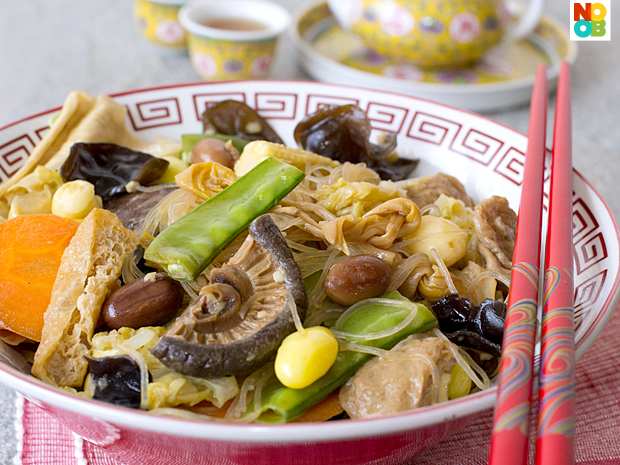
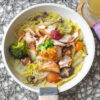
Buddha’s Delight or Luo Han Zhai 罗汉斋 (罗汉全斋 if 18 ingredients are used) is a popular vegetarian dish in Chinese and Buddhist cuisine. For those who are not familiar, it is a more elaborate version of our local chap chye with a longer list of vegetarian ingredients. It is considered auspicious to eat this dish during Chinese New Year (traditionally eaten on the first day). This recipe contains a long list of ingredients to add in your Luo Han Zhai for a sumptuous and luxurious plate, and you can change or omit the ingredients as you please.

    Like Noob Cook on Facebook

Recipe Updates via Email

Enter your email address:
  

Luo Han Zhai

This recipe (microwave version) was first published on Samsung SG microwave campaign microsite in 2010 (now offline).

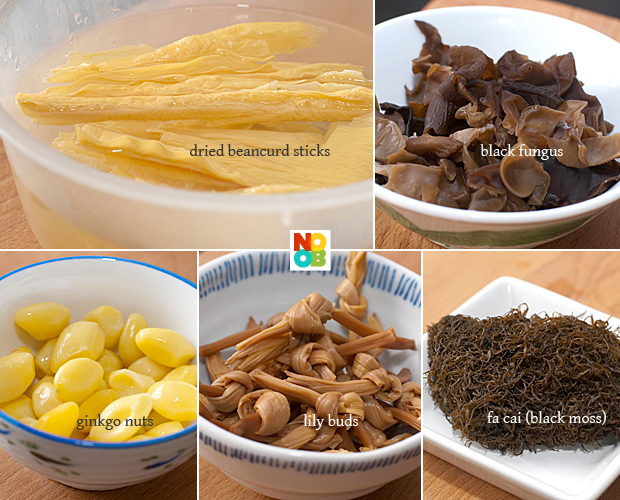
Ingredients for cooking Chap Chye Ingredients for Chap Chye (Stewed Vegetables)

Ingredients
(Serves 6)

- 2 tbsp vegetable oil
- 4 cloves of garlic, minced
- 5 slices ginger
- 15g (‘nam yee’/red fermented bean curd (豆腐乳)
- 100g napa cabbage (大白菜), cut to small pieces
- small piece of fat choy (fa cai/发菜)
- 35g bean curd sticks (腐竹), soaked in water until softened, drained
- 50g bamboo shoots (笋), sliced thinly
- 100g dried/braised gluten (面筋) (you can also use mock vegetarian abalone which is made of fried gluten)
- 100g baby corn, sliced diagonally
- 1 carrot, peeled and slice thinly
- 50g snow peas (荷兰豆), gently break off the ends and pull off the “strings”
- 3 bean curd puffs/‘tau pok’, sliced to strips
- 15 vacuum-packed or canned ginkgo nuts (白果)
- 15 vacuum-packed or canned lotus seeds (蓮子)
- 30g cellophane noodles/‘tang hoon’ (粉絲), soaked in water until softened, drained

Soak in individual bowls of hot water for 30 mins, drained & cut to smaller pieces:
- 10 dried Chinese mushrooms (after soaking, discard stems before cutting)
- 10g dried black (wood ear) fungus (木耳) (after soaking, trim and discard the hard portion on the centre underside of the fungus before cutting)
- 15g dried lily buds (金针) (after soaking, tie each lily bud with a knot)

(A) Sauce (mix well in a small bowl)
- 2 tbsp vegetarian oyster flavoured sauce
- a small pinch of sugar
- a dash of white pepper powder
- 2 tsp corn flour
- 1 tbsp sesame oil

Directions (Stove-Top Recipe)
1. Heat oil in wok. Stir fry chopped garlic & ginger until fragrant. Then add nam yee and mash it to smaller pieces with the spatula.
2. Add cabbage and stir fry till softened (a few minutes).
3. Add the rest of the ingredients (except for the tang hoon) together with Sauce (A) and 2/3 cup water. Bring to a boil then cover with lid and let the vegetables simmer for about 5-10 minutes. Anytime the water runs dry, you can top up with hot water or stock.
4. When the vegetables are cooked and the water is reduced, add tang hoon and stir briefly to allow the tang hoon to absorb the sauce.

Directions (Microwave Recipe)
1. Add cabbage in the casserole with 50ml water. Cover with lid and microwave on high (900 watts) for 5 minutes, or until the cabbage withers. Set aside the cooked cabbage in a plate.
2. When the casserole has cooled, discard water and wipe it dry with paper towel. Add cooking oil, garlic, ginger and nam yee. Cover with lid and microwave on high for 2  minutes. Use a spatula to mash the nam yee.
3. Add the rest of the ingredients and 50ml water. Cover with lid and microwave on high for 2 minutes. Stir to coat the ingredients evenly with the sauce.
4. Prepare the sauce by mixing the ingredients listed in (A) with 2 tbsp water in a small bowl. Drizzle the sauce over the ingredients and stir thoroughly to coat the ingredients evenly with the sauce. Cover with lid and microwave on high for 2 minutes, or until all the ingredients are cooked.

Cooking Notes
1. If you are serving this dish during Chinese New Year (traditionally eaten on the first day), add fat choy and arrowhead as these foods have auspicious symbolisms.
2. If you are cooking this dish for Buddhist vegetarians, you may wish to omit garlic as some Buddhists vegetarians do not consume it.

If you enjoy this article, please share, tks!
Follow Noob Cook
Follow Me on Pinterest


Leave a Comment

{ 11 comments… read them below or add one }

1 masterofboots January 16, 2012 at 5:16 pm

Adding nam yee is such a nice touch. It makes the seasoning more interesting

Reply

2 Donna Bee via Facebook January 16, 2012 at 6:00 pm

Woah u bought 18 ingredients to put in! It looks yummy :)

Reply

3 Angie@Angie's Recipes January 16, 2012 at 8:28 pm

wow your luo han zhai looks way better than the one served in the restaurants! Bravo!

Reply

4 food-4tots January 16, 2012 at 11:00 pm

What a co-incidence! I just cooked it yesterday. But your version looks so much better than mine. It looks as good as the 罗汉全斋!! ;)

Reply

5 Platanos, Mangoes & Me! January 17, 2012 at 4:04 am

I like this dish very much and I am sure your version is delicious. I just told my husband we have to go out and get some….my mouth is watering…

Reply

6 tigerfish January 17, 2012 at 7:23 am

I can eat this in replacement of any other CNY dish!

Reply

7 shirley@kokken69 January 17, 2012 at 7:23 am

I have cooked Luo Han Zhai for CNY once many years ago… Looking at your photos, reminded me how good this dish would taste… making a mental note to cook this soon.

Reply

8 NoobCook via Facebook January 17, 2012 at 9:44 am

mine was 3 ingredients short of 罗汉全斋 :p

Reply

9 mochachocolatarita January 17, 2012 at 12:40 pm

such a scrumptious veggie dish! yumm

Reply

10 B January 17, 2012 at 10:02 pm

A yummy, tasty and healthy dish!

Reply

11 HoppingHammy January 22, 2013 at 10:05 pm

That looks delicious and oh my gosh those little teapots and cups are SO CUTE! ^_^

Reply