




Claypot Cooking Care

by wiffy on October 24, 2011

in Claypot Recipes,Cooking Basics,How-To Recipes

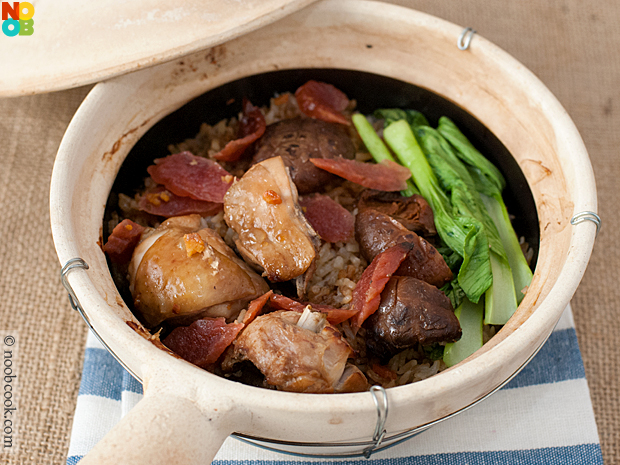
Claypot Rice
Yummy claypot rice I ate in Hong Kong

I’m now a huge fan of claypot (砂鍋/ 煲仔) cooking. I fell in love with it ever since I used it for the first time to cook braised chicken with bittergourd, and the most recent claypot dish I cooked – claypot chicken rice – totally impressed me again with the distinctive smoky flavour I love so much about claypot rice (recipe coming up soon). Since I will be featuring new claypot recipes on this site, I thought I will write a short article about Chinese claypot care as a reference for those who might be interested to venture into claypot cooking too. If you have more tips about claypot cooking, please share them with me at the comments section.


    Like Noob Cook on Facebook

Recipe Updates via Email

Enter your email address:
  

Benefits of clay pot cooking

1. Since the material is porous, it absorbs water. When cooking food, the moisture is released, making the cooked food moist, juicy and tender similar to steaming effect. There is also less evaporation of water and food do not burn so easily.

2. The claypot retains heat well, so it can cook food in a quicker and more effective way. It also keeps the food warm and further slow-cook it, with lid close for at least another half an hour after cooking.

3. You can re-heat and serve the food in the claypot right away.

4. Dishes such as claypot rice have a wonderful earthy and smoky flavour which is distinctive with claypot cooking.

Selecting a claypot

Chinese Claypot
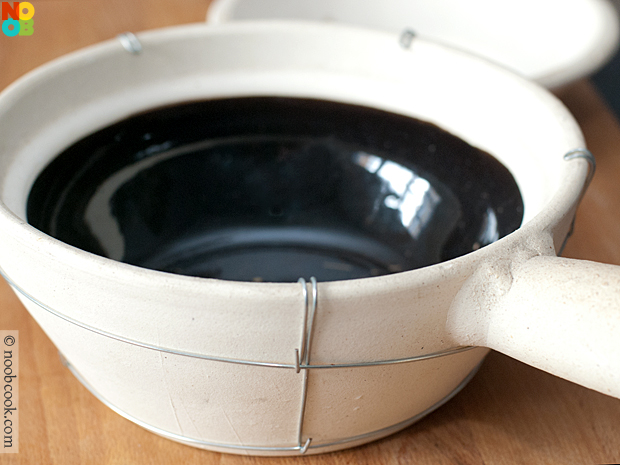
Chinese claypot with glazed interior and coiled wires on the exterior

1. Make sure there are no visible cracks on the wall and the lid can close snugly.

2. Choose a claypot that comes with metal wires along the walls (pictured above) as it helps to conduct heat quickly and evenly throughout the casserole.

How to prep a brand new claypot for first time use
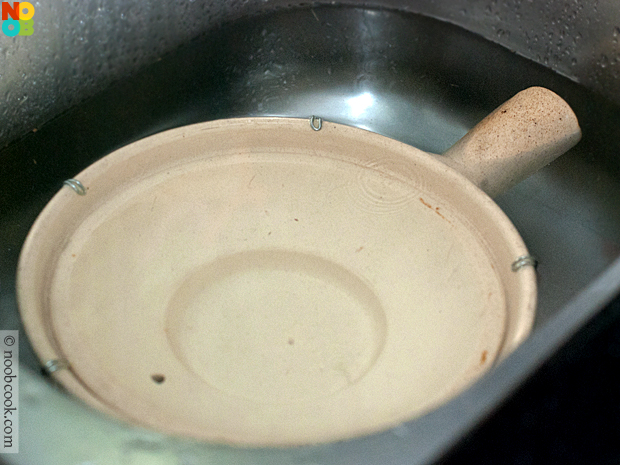
Soaking claypot for first time use
Soaking brand new claypot in water

1. Totally submerge and soak the claypot in water (turn the lid inside out) for at least half an hour (pictured above).

2. If there is any dirt or powder on the claypot, scrub it well with a hard brush or non-metallic scrubbing pad.

3. If you bought the type which is porous throughout (without the glazed interior walls), you can also boil some water or porridge in it after soaking.

4. Leave the claypot at room temperature to air dry, do not use dish washer.

5. For first time cooking in a new claypot, do not cook food with strong flavours such as seafood or curries as the smell may linger on and affect the taste of the other dishes.
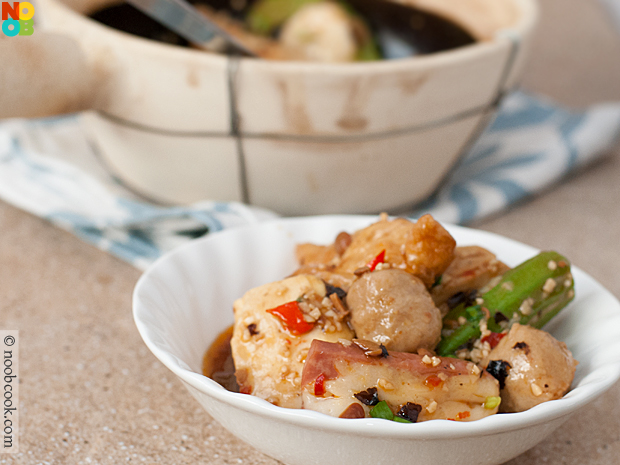
Claypot Chicken with Bittergourd
Claypot Chicken with Bittergourd Recipe

Care for clay pot

1. No sudden change in temperature. Claypot can withstand relatively high heat both on the stove top and inside the oven. However, they cannot withstand sudden fluctuations in temperature so always increase heat gradually. Do not put the claypot straight away inside a preheated oven; instead put it inside the cold oven and let it heat up gradually. On stove top, heat the claypot starting with a low medium heat and increase the temperature gradually. If you took the claypot out from the fridge, let it rest and return to room temperature before reheating.

2. Temperature. Since claypot conducts and retains heat well, you generally do not need as high heat as you normally need. You can use lower temperature to cook the same type of food, compared to the heat you normally use when cooking in other types of cookware.

3. Washing. After cooking, use a hard brush or non-metallic scouring pad to scrub. Wash the glazed part of the claypot with mild soapy water. For the unglazed part, do not use detergent as the porous material may absorb it. Instead, use natural cleaning agents such as lemon or vinegar solution.

If you enjoy this article, please share, tks!
Follow Noob Cook
Follow Me on Pinterest


Leave a Comment

{ 30 comments… read them below or add one }

1 tigerfish October 24, 2011 at 5:21 pm

Good information. Thanks.
Claypot cooking is even better in colder weather due to the heat retention in the pot. I should have brought one with me when I moved. Will try to get one in future. Can you believe? I am even too lazy to hunt for claypot when I am over there :O sigh…

Reply

2 wiffy October 25, 2011 at 11:46 am

wow you reach US already, that’s fast. aiyah, next time you must bring a few claypots and some hong zao back!!!

Reply

3 Little Corner of Mine October 24, 2011 at 10:25 pm

Thanks for the info. I have one that I hardly use, this info. will come in handy.

Reply

4 Wandering Chopsticks October 25, 2011 at 2:16 am

No cooking rice for the first time to seal up any fine lines? That’s what the instructions said to do for my claypot. I don’t know if it works, but I did it anyway. :P

Reply

5 wiffy October 25, 2011 at 11:44 am

I cooked porridge as a prep for first time use. But it’s actually more applicable for those claypots which are unglazed on the inside (same porous material throughout). Mine is glazed interior but like you, I did it anyway lol

Reply

6 Platanos, Mangoes and Me! October 25, 2011 at 3:38 am

I have been using clay pots for so long. I had bought a set when I was visiting portugal. They even had one for a whole chicken. We call them “ollas”.

Reply

7 Juliana October 25, 2011 at 4:13 am

Nice post…I have a couple of clay pot, but do not use often enough…now that the cold may be arriving I’ll try to use it more often.
Hope you have a great week ahead and thanks for this informative post :-)

Reply

8 masterofboots October 25, 2011 at 8:04 am

Thanks for this post! Nowadays it’s not so common to use claypot for cooking so I don’t even have the basic information to get started :P

Reply

9 mochachocolatarita October 25, 2011 at 11:53 am

food porn at its best!

Reply

10 The Sudden Cook October 25, 2011 at 11:59 am

Made bak kut teh using claypots – one is exactly like yours as seen in the photo!! Must try your claypot chicken rice recipe too – I do mine using a rice cooker – but hope to graduate to using a claypot for a more authentic flavour.

Reply

11 Angie@Angiesrecipes October 25, 2011 at 12:49 pm

Kinda tricky to take care of those fragile things…Thank you for sharing this!!

Reply

12 Ann@Anncoo Journal October 26, 2011 at 12:46 am

Thanks for sharing these good tips :)

Reply

13 jo October 26, 2011 at 9:43 pm

Great tips Wiffy! Makes me want to take out my claypot (which is still new) and whip up a dish this weekend. I do agree that dishes made in a claypot tastes so much better.

Reply

14 TasteHongKong October 26, 2011 at 11:34 pm

Very organized and informative post. Before the first boiling, I also seasoned the outer bottom of the clay pot with oil, and air-dry it, just to share.

Reply

15 zenchef October 27, 2011 at 11:31 am

Nom nom nom.. that looks absolutely delicious! :)

Reply

16 Michelle November 4, 2011 at 12:17 pm

Wiffy, thanks for the great tips! I don’t own a claypot so appreciate your advice as to where to get one? Estimated cost? Is it difficult to scrub off the burnt rice (which taste so heavenly!)? Michelle

Reply

17 wiffy November 4, 2011 at 1:24 pm

You can find at those old 杂货店 which sells crockery. I got mine at Chinatown, row of shop houses facing Chinatown Complex (the big hawker). I can’t remember how much I got it for, around S$10? So far I did not hear any complaints about the burnt bits being difficult to clean (I am the cook so someone else washes hehe) … I think just soak in water and use a non-metallic scrubbing pad or hard brush.

Reply

18 Suzy December 30, 2011 at 2:23 pm

Wiffy, I am new using clay pots.  I had grown seen my mother cooking in them but never knew that I had to cure it before I cook something in it.  I am in desparate need of advice.  I bought a new claypot, just washed it carefully and let it dry.  After a few days I made the traditional sweetened vinager, ginger, and egg soup for my soon baby to come.  I noticed a little leak that first time, but did not pay much attention to that.  Next time I heated my claypot, I noticed more leaks and a change in color (more dark) of the outside of the claypot.  Today, I reheated the soup but could not do it because the bottom of my claypot have a severe leakage and was burning my stovetop.  I thought I bought a defective claypot until I began my search and read something about curing first time clay pot.  
My question is if there is some remedy for my situation or should I buy a new clay pot and transfer my soup.  I had an unglazed claypot in the outside, and it is glazed in the inside.
Thanks for all your help!!

Reply

19 dvdhen August 12, 2012 at 9:10 pm

awesome food cook with clay pot,thanks for sharing

Reply

20 Jennifer December 19, 2012 at 5:42 pm

You site has interested me in purchasing a clay pot and make some of the dishes that you have posted but as you said above there are glazed and un-glazed clay pots which is better?

Reply

21 wiffy December 26, 2012 at 3:30 pm

I’m personally using a glazed inner pot because that’s what is more common here. And glazed is easier to clean. But if you like 100% claypot cooking, you can go for unglazed. It’s totally your personal choice.

Reply

22 M.Sivakumar reddy February 11, 2013 at 10:37 pm

Hi Wiffi,

I am from India.In our country people usually cooked in clay pots in ancient times.Now everyone is using metalic bowls.I want to make people to use clay pot cooking.If you suggest some uses regarding health by using clay pots,I will tell the people and make them, use again

Thanks

Reply

23 Jacqui February 17, 2013 at 5:37 pm

Hi
can you help first time using clay pot and I obviously did not use enough liquid and burnt bottom of pot inside can I save it

Reply

24 Rebecca March 5, 2013 at 11:52 pm

Thanks for the awesome post, this is all the info I need. Just bought one and I’m puuumped

Reply

25 Swetha March 22, 2013 at 7:55 pm

Good information on cooking with clay pot. I have cooking in clay pot for the last 6 months and the health benefits are really amazing.

Reply

26 EvE April 24, 2013 at 8:15 pm

Hi!! May I know where can I buy the Chinese clay pot with coiled wires on the exterior in Singapore?

Reply

27 Swetha April 24, 2013 at 9:28 pm

You can buy it from Temple street in Chinatwon. There are couple of utensils shop there that sell clay pot with or without wire gauze. I have tried both both work equally well. If you soak in water for few mins before use.

Reply

28 EvE April 25, 2013 at 9:57 pm

Thanks Swetha for the info.

Reply

29 wiffy April 26, 2013 at 3:06 pm

that’s exactly where I got it from too :)

Reply

30 EvE April 29, 2013 at 10:03 pm

Thanks Wiffy! Happy cooking :)

Reply