Ginseng Chicken Soup
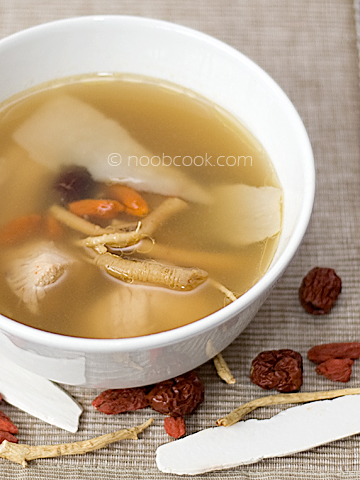
Ginseng Chicken Soup 洋参须鸡汤
This is the third and final installment of my cooking with ginseng series. After whipping up ginseng drinks and foil-wrapped ginseng chicken, how can I, a self-proclaimed lover of Chinese soups, not try making ginseng soup? ;p
Personally, this is my favourite way of cooking ginseng because the slow & gentle boiling really brings out its wonderful herby taste. This is the perfect soup for nourishing & rejuvenating oneself.
The type of ginseng I am using is known as American Ginseng “Beards”/ American Ginseng Fiber/ 洋参须 /Yang Shen Xu. For more information about this type of ginseng as well as where to purchase it (in Singapore), please refer to this post.
I love Chinese herbs but I didn’t want to add a tonne of different types to my soup (like this Herbal Chicken Soup) because I want ginseng to take centerstage this time round. So I just added huai shan 淮山 (see photo below), which lends a mild, supporting yet distinctive sweet taste to the soup. Huai shan appears chalk like and has a bright white colour, and is said to benefit the spleen, lungs and kidneys. I experimented with adding huai shan to my ginseng soup as I have seen it as a food pairing with ginseng on more than one occasion in cookbooks and when I’m dining out.
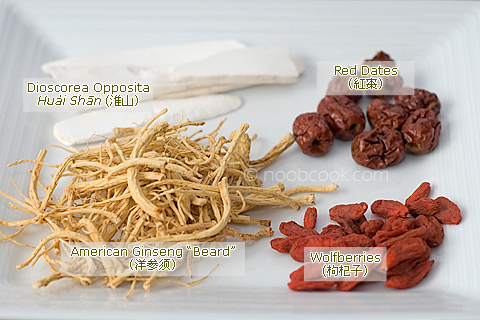
Ingredients
Serves 3-41/2 chicken*, chopped to small pieces and skin removed
40g American Ginseng “Beards” 洋参须**
1.6 litres of water
25g Huai Shan 淮山
10 red dates
1/2 tbsp wolfberries
a pinch of salt* (optional)* You can also substitute with 1 small black chicken or 250g lean pork, sliced thickly. Skip the blanching part (step 1 below) if using lean pork. I personally prefer using chicken.
** If you are ‘scared’ of the ‘bitter’ taste of ginseng, reduce to 30g. Similarly, if you want a richer ginseng taste, you can increase the amount to 50g.Directions
1. Blanch chicken pieces in a pot of boiling water for 5 minutes. Drain and set aside.
2. Place the blanched chicken and the rest of the ingredients (except wolfberries) into a pot with the water. Bring to a boil, continue boiling over high heat for 10 minutes.
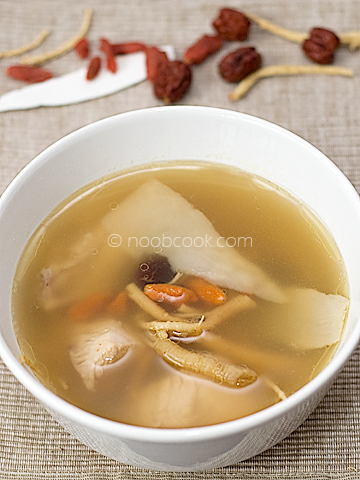
3. Reduce heat to a lower flame and simmer for at least another 40 minutes (and longer if you can). Add wolfberries at the last 15 minutes of cooking. You can also slow cook, or use a thermal pot (or whatever you have) to prolong the cooking (at a gentle pace) to bring out the tastes. Add salt to taste.
===
Note: I’m sending this to Weekend Herb Blogging which is hosted by Ivy from Kopiaste this week.